

An unlikely ally
By Merab Dorgu, Digital Marketing Associate, Tilt House, and Sam Viney, Co-Founder, Tilt House
As Nigeria turns to off-grid power solutions, its green energy transition may depend on an unexpected partner. We regret to inform all policymakers, clean energy champions, and press: the hero of this story is… the niche social media influencer. Hear me out.
Let’s unpack why.
The Energy Transition
Today, around four in ten Nigerians — more than 80 million people — still live without access to electricity, the largest energy-access gap of any country in the world. The national grid simply doesn’t reach everyone, and where it does, it often can’t keep up with demand. Across the country, blackouts happen often. That’s why diesel and petrol generators are everywhere. By some estimates, these generators make up more combined power than utility-scale plants.
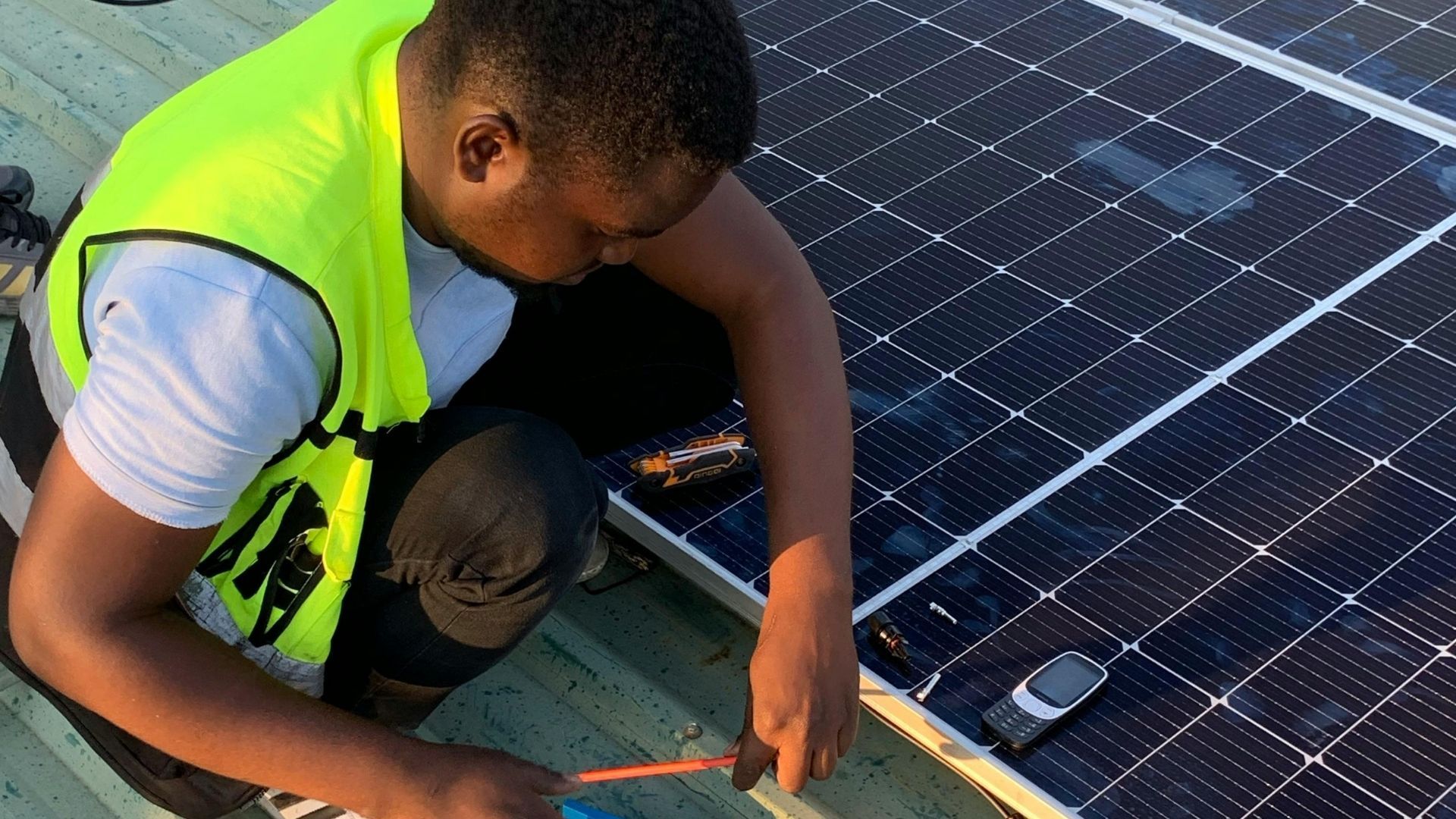
Going solar is an appealing alternative to noisy and expensive generators. Solar is now very affordable. The cost of solar panels has dropped by over 90% over the last ten years. Though startup costs can be pricey, financing options are now a common way to break up initial product costs into small, manageable payments.
The Digital Shift
It’s no surprise that social media is on the rise, and Nigeria is no exception. The country ranks among the world’s heaviest social media users, with the average user spending more than three hours on social media each day.
What may come as a surprise (at least to these millennial authors) is the digital phenomenon that is flipping the script on search engines.
Once upon a time, websites carried a certain “I’m official!” glow; something that social platforms couldn’t quite match. But that’s changing fast.
Today, a staggering 46 percent of Gen Z uses social media as their primary search engine, which is leaving the old guard (yes, even Google) playing catch-up.
This trend is especially true in Africa, where Facebook reigns, and small businesses often exclusively set up shop on social media, websites be damned.
Building a Trust Economy
How can we explain these digital trends, and how does it tie back to solar?
For one, trust is a critical issue in Nigeria’s digital economy. Higher-than average rates of fraud and scams mean that people are especially cautious online.
In Nigeria, this has created a “trust filter” where audiences pay close attention to who is speaking, not just what is being said. A familiar face from their community recommending a solar product feels far safer than an anonymous advert.
Trust issues aren’t just Nigeria’s problem, though. They’re everyone’s. And though I’d love to pin them on our collective exes, these ones are deeply systemic. In a world where brand voices are suffocating and everything is starting to sound homogeneous (cough, ChatGPT, cough), a little authenticity can go a long way.
So, while marketers could invest millions on high-budget TV productions, billboards, and fancy websites, it’s plausible—if not highly likely—that their audiences are tuning them out altogether. Smartphones and social media have leapfrogged the television.
These days, influence is about trust and human connection, not clout. In rural Zambia, for instance, a study found that most solar converts are swayed by social proof.
Back to that Influencer…
That’s where influencers come in. And I don’t mean the usual suspects. The smaller and more niche, the better, honestly.
These influencers may only have a couple thousand followers, but they often have something that the big wigs may not: A raw offering of humanity.
So if people like Debby and Family, known for her relatable family and home content, were to share how solar has helped her keep the lights on during dinner parties, she would be providing social proof to hundreds of thousands who trust her.
Or take Fisayo Fosudo, one of Nigeria’s leading tech storytellers, whose videos break down how innovations, from mobile devices to home power solutions, fit into everyday life. His grounded storytelling makes tech feel personal and attainable. If someone like Fisayo were to showcase how clean energy products integrate seamlessly into a modern Nigerian lifestyle, his audiences would be likely to listen and act.
Influencers in Action
A new initiative funded by the IKEA Foundation, ZE-Gen, is exploring exactly this concept: how micro-influencers can be used to shift behaviour and build trust in the solar space.
Through the project, Tilt House, a small but growing mission-driven communications agency (that’s us!) is working with leading Nigerian off-grid solar companies to partner with these influencers.
The goal is to meet audiences where they already are: on WhatsApp groups, Instagram reels, and TikTok videos that blend everyday life with practical problem-solving. It’s a subtle but powerful shift: from polished ads to conversations that feel like they’re coming from a neighbour who’s tried it, tested it, and trusts it.
The project is working with local research and behaviour change communications experts to produce tasteful content that will digitally capture what’s already happening in the real world: authentic human interactions.
The Bigger Picture
With the future of our climate at stake, it’s time to take an all-hands-on deck approach. In a country where trust and community drive decisions, everyday influencers from the hairstylist, the tech tinkerer, the lifestyle mum, might just be the unexpected heroes of Nigeria’s solar revolution.